
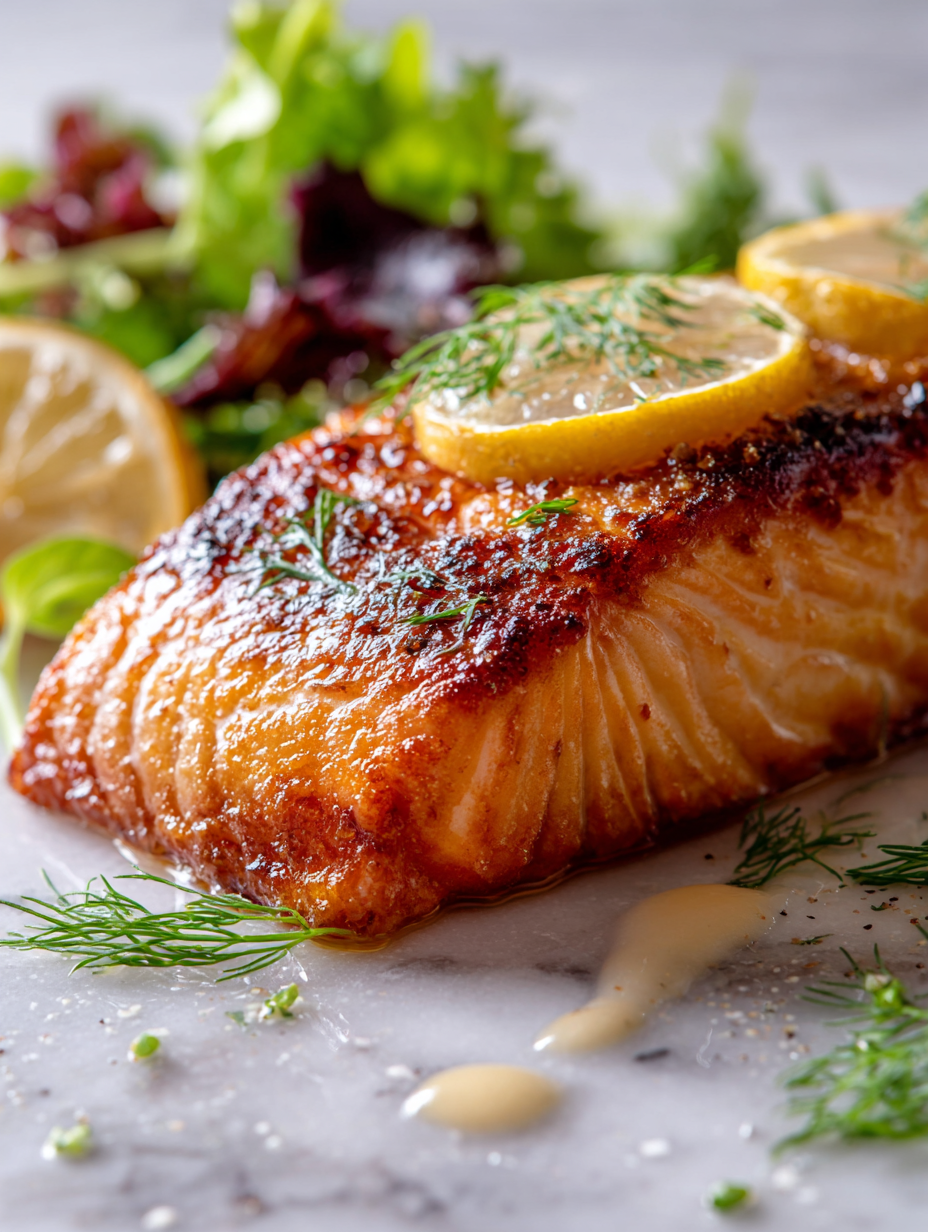
Getting that crispy skin just right on salmon isn’t about luck, it’s about small, deliberate choices. I’ve learned that the right pan, heat level, and patience can turn a simple piece of fish into something that crackles with every bite. It’s honestly a satisfying process, even if you mess it up a few times.
This recipe isn’t about quick fixes or shortcuts. It’s about paying attention to the tiny details—like how much oil to use, how long to press the fish down, and when to flip—to get that perfect, golden skin that’s satisfying to bite through. It’s a little ritual that rewards you with crispy skin and tender, flaky flesh.
I love making this dish when I want a show-stopping yet straightforward dinner. It’s a reminder that simple ingredients, handled with care, can deliver a complex, rich flavor. Plus, the smell of sizzling salmon skin is undeniable—crisp, smoky, with a hint of sea salt—making every step worth it.
Focusing on the often overlooked process of achieving perfectly crispy salmon skin, this recipe dives into the small, crucial details that make all the difference—like how the temperature of the pan and the patting technique can turn a good dish into a memorable one.
The subtle art of crispness
- Achieving that perfect crispy skin on salmon feels like a small victory every time, especially after so many attempts.
- I find that the smell of sizzling, golden skin instantly transports me back to seaside markets in summer.
- There’s a quiet pride in getting the skin crackling just right, especially when you hear that satisfying sizzle.
- Honestly, watching the skin crisp up while the flesh stays tender is oddly meditative and deeply satisfying.
- Sometimes, the simplest dishes—like crispy salmon skin—bring the biggest sense of accomplishment.
The subtle art of crispness
One evening, I was trying to impress a friend with a simple dinner. I remembered how my grandmother used to cook fish, always with that irresistibly crispy skin. That memory pushed me to focus on those small, crucial details—like the pan temperature and patting the fish dry—because I wanted that perfect crackle. Now, I find myself returning to this dish whenever I need a reminder that the tiniest steps make the biggest difference in the kitchen.
Crispy Salmon Skin Trivia
- Salmon skin was once considered a discard, until chefs discovered it could be transformed into a crispy delicacy with simple techniques.
- The technique of crisping fish skin dates back to traditional Japanese cooking, where crispy-skinned fish is a staple in many dishes.
- Historically, achieving crispy skin was a matter of resourcefulness—using just heat and salt—long before modern kitchen gadgets.
- In Nordic countries, crispy fish skin is prized for its texture and flavor, often served as a snack or garnish.
Key Ingredients for Crispy Skin
- Salmon fillet: I look for a firm, bright piece with shiny skin—really fresh and lively to the eye. If yours looks dull or slimy, it’s better to pick another.
- Salt: I prefer coarse sea salt for that extra crunch and flavor. Too fine, and it dissolves too quickly, losing its crispy potential.
- Oil: I use neutral oil with a high smoke point—like canola or grapeseed. If I want a richer flavor, a touch of sesame oil adds a nutty aroma, but be careful with the heat.
- Vinegar or lemon: A splash of acidity brightens the richness. I keep lemon wedges nearby to squeeze fresh, especially after crispy skin emerges.
- Pepper: Freshly cracked black pepper adds a smoky heat—don’t skip it, but keep it light early on to avoid burning.
- Herbs (optional): A sprig of thyme or dill can add a fragrant lift if you’re serving the fish with greens or a sauce—add at the end for freshness.
- Paper towels: I pat the skin very dry before hitting the pan—moisture is the enemy of crispness. If the skin isn’t dry, it’ll steam instead of crisp.
Spotlight on key ingredients
Salmon:
- Salmon skin: I look for shiny, firm skin that feels tight and smooth—freshness shows here. Dull, slimy skin means pass.
- Salmon flesh: I prefer bright, vibrant color, with a firm texture that bounces back when pressed. Pale or mushy flesh is a no-go.
Salt and Oil:
- Coarse sea salt: I use it generously on the skin to draw out moisture and add crunch. Too fine, and it dissolves too quickly.
- Oil: I favor high-smoke-point oils like grapeseed or canola—neutral, but essential for that perfect crackle and even heat.
Notes for ingredient swaps
- Salmon: Wild-caught sockeye offers a richer flavor and firmer flesh, but farmed Atlantic salmon is milder and more readily available.
- Salt: Coarse sea salt provides better crunch, but kosher salt works in a pinch—just use a bit less to avoid over-salting.
- Oil: Neutral oils like canola or grapeseed have high smoke points; if you prefer a hint of flavor, light sesame oil adds a nutty aroma, but watch the heat.
- Vinegar or lemon: Lemon juice brightens the dish with zesty freshness, while a splash of rice vinegar introduces a subtle tang—choose based on your flavor preference.
- Pepper: Freshly cracked black pepper adds smoky heat, but white pepper gives a milder, less visible kick if you want a subtler spice.
- Herbs: Fresh dill or thyme can lift the dish, but if you prefer a simpler flavor, skip herbs altogether or use dried, adding early in cooking.
- Paper towels: Use thick, absorbent paper towels to pat dry; if you only have thinner towels, press gently to remove excess moisture without tearing.
Equipment & Tools
- Heavy skillet (cast iron preferred): Provides even heat for crispy skin
- Paper towels: Dry the fish thoroughly
- Spatula or tongs: Flip and handle the fish gently
- Lemon or vinegar: Finish with bright acidity
Crispy Skin Salmon Guide
- Equip your workspace with a heavy skillet—preferably cast iron—so heat distributes evenly and gets that skin crackling.
- Pat the salmon dry with paper towels—seriously, moisture is the enemy of crispness—about 2 minutes per side, until no surface dampness remains.
- Lightly season the skin side with coarse sea salt and a touch of black pepper, pressing it gently into the flesh for even coverage.
- Heat the skillet over medium-high heat—around 200°C (390°F)—until it shimmers, then add a high-smoke-point oil like canola or grapeseed, swirling to coat.
- Lay the salmon skin-side down in the hot oil, pressing gently with a spatula for 10 seconds to prevent curling and promote contact.
- Cook for about 4-5 minutes, undisturbed; you’ll see the skin turn a deep golden brown and hear a steady crackling sound.
- Flip the fillet carefully using tongs or a fish spatula—aim for a clean release with minimal sticking, about 1-2 minutes on the flesh side.
- Check for doneness: the flesh should be opaque and flaky, and the skin crisp and crackly; if not, cook in 30-second bursts.
- Remove from heat, transfer to a plate lined with paper towels for 1 minute, allowing excess oil to drain and skin to set.
- Finish with a squeeze of fresh lemon and a sprinkle of flaky sea salt—serve immediately for maximum crunch and flavor.
Rest the cooked salmon for 1 minute on a paper-lined plate to let the juices settle. Finish with a squeeze of lemon and flaky sea salt, then serve immediately for best texture and flavor.
How to Know It’s Done
- The skin is deep golden and crackling loudly.
- The flesh is opaque and flakes easily with a fork.
- The skin remains crispy and doesn’t sag or turn soggy.
Crispy Skin Salmon
Ingredients
Equipment
Method
- Pat the salmon fillets dry thoroughly with paper towels, focusing on the skin to remove any surface moisture. This step is crucial for achieving crispiness.
- Sprinkle a generous layer of coarse sea salt over the skin of each fillet, pressing it gently into the flesh with your fingers to ensure even coverage. This helps draw out excess moisture and enhances crunch.
- Heat a heavy skillet over medium-high heat until it shimmers and you see a faint smoke. Add the high-smoke-point oil, swirling to coat the bottom evenly.
- Carefully place the salmon fillets skin-side down into the hot oil, pressing gently with a spatula or tongs for about 10 seconds. This prevents curling and ensures full contact for crisping.
- Allow the salmon to cook undisturbed for about 4-5 minutes, until the skin turns a deep golden brown and you hear a steady crackling sound. The flesh should start to look opaque around the edges.
- Gently flip the fillets using a spatula or tongs and cook for an additional 1-2 minutes on the flesh side until the fish is opaque and flakes easily with a fork.
- Remove the salmon from the skillet and place it on a paper towel-lined plate. Let it rest for about a minute to drain excess oil and help the skin crisp further.
- Squeeze fresh lemon juice or a splash of vinegar over the top for brightness. Add freshly cracked black pepper for added smoky heat if desired.
- Serve immediately, enjoying the satisfying crackle of the golden skin and tender, flaky flesh inside. Pair with your favorite sides for a complete meal.
Pro tips for crispy skin
- Pat the fish dry: Moisture is the enemy of crispness—use paper towels to remove surface wetness thoroughly.
- Press the fish down: Gently press the salmon skin into the pan for the first 10 seconds to prevent curling and ensure contact.
- Use a hot pan: Heat your skillet until shimmering—around 200°C (390°F)—to achieve that crackling skin immediately.
- Don’t overcrowd: Cook in a single layer without crowding; too much fish will lower the temperature and soggy the skin.
- Flip carefully: Once the skin is deep golden and crackling, flip gently with a spatula or tongs to avoid breaking the skin.
- Rest before serving: Let the fish sit for a minute after cooking—this helps the juices settle and keeps the skin crisp.
- Finish with acid: Squeeze fresh lemon or vinegar right before serving to brighten the rich, crispy skin experience.
Common mistakes and how to fix them
- FORGOT to dry the fish skin thoroughly → Pat dry to prevent steaming.
- DUMPED oil in the pan → Use enough to coat, but avoid excess that causes splatter.
- OVER-TORCHED the skin → Keep heat moderate; remove when skin is golden, not burnt.
- MISSED flipping at the right time → Flip when skin is deeply golden and crackling loudly.
Quick fixes and pantry swaps
- When skin isn’t crisp enough, splash a little more oil and cook a minute longer.
- If fish sticks to the pan, patch with a gentle nudge—use a non-stick or well-seasoned skillet.
- Splash some lemon juice if skin turns soggy—brightens and revitalizes crispness instantly.
- When in doubt, shield the fish with a lid briefly—traps heat and helps crisp the skin faster.
- Dumped too much oil? Rescue with paper towels—absorb excess and restore crunch quickly.
Prep, store, and reheat tips
- Pat the salmon skin dry thoroughly before cooking—doing this a few hours ahead and refrigerating uncovered helps keep the skin dry for better crisping.
- Store any leftover cooked salmon in an airtight container in the fridge for up to 2 days; reheat gently in a hot skillet until the skin crisps up again, about 1-2 minutes per side.
- Raw salmon can be prepped a day ahead—season and pat dry, then refrigerate uncovered to maintain dryness, which aids in crispness during cooking.
- Reheating the cooked fish can cause sogginess; to restore crispiness, briefly broil at high heat or re-fry skin-side down in a hot pan until crackling again, listening for that satisfying sizzling.
- For best sensory results, reheat just until warmed through—overdoing it will make the skin lose its crunch and the flesh dry out.
Top questions about crispy skin salmon
1. How do I get crispy skin on salmon?
Use a very hot, well-seasoned skillet and pat the fish dry thoroughly. This combination helps the skin turn crisp and golden without sticking.
2. Why isn’t my salmon skin crispy?
Pat the salmon skin completely dry with paper towels before cooking. Moisture is the main enemy of crispness.
3. When do I flip the salmon?
Cook the salmon skin-side down first over medium-high heat without moving it. Let it sit until deeply golden and crackling, then flip carefully.
4. Can I cook multiple pieces at once?
Don’t overcrowd the pan. Cook in a single layer to keep the temperature high and ensure even crisping.
5. What oil is best for crispy skin?
Use a high-smoke-point oil like canola or grapeseed. Add just enough to coat the pan lightly for a crackling effect.
6. Should I add lemon before or after cooking?
Finish with a squeeze of lemon or vinegar right after cooking. It brightens the richness and adds a fresh contrast to the crispy skin.
7. How long should I rest the salmon?
Rest the cooked salmon for about a minute on a paper towel-lined plate to drain excess oil and help the skin set.
8. My skin isn’t crackling, what should I do?
If the skin isn’t crisp enough, turn up the heat slightly and cook for an extra 30 seconds, listening for that crackling sound.
9. How do I flip without breaking the skin?
Use a spatula or tongs to flip the salmon gently, avoiding tearing the skin. Flip only when it’s deeply golden and crackling.
10. Can I reheat crispy salmon skin?
Store leftovers in the fridge for up to 2 days. Reheat in a hot skillet skin-side down for a couple of minutes to revive crispness.
Crispy skin salmon feels like a small, satisfying victory in the kitchen. It’s about those tiny details—pan temperature, patting dry—that make all the difference. When you hear that crackle and see the golden skin, it’s hard not to feel a bit proud.
This dish reminds me that simple ingredients, treated with care, can deliver rich flavor and texture. It’s perfect for a quick weeknight dinner or when I want a bit of that crispy, smoky crunch. And honestly, that smell of sizzling skin—crisp and savory—never gets old.

Hi, I’m Hannah Reynolds, the heart behind Seasoning Therapist. I believe food can comfort, restore, and gently reset us after a long day. I started Seasoning Therapist with one simple idea in mind: cooking is not just about feeding the body, it is about caring for the mind too. The right seasoning can change the mood of a dish, and sometimes even the mood of the person eating it. This blog is where I combine my love for thoughtful cooking with my belief that the kitchen can be a place of healing.
