
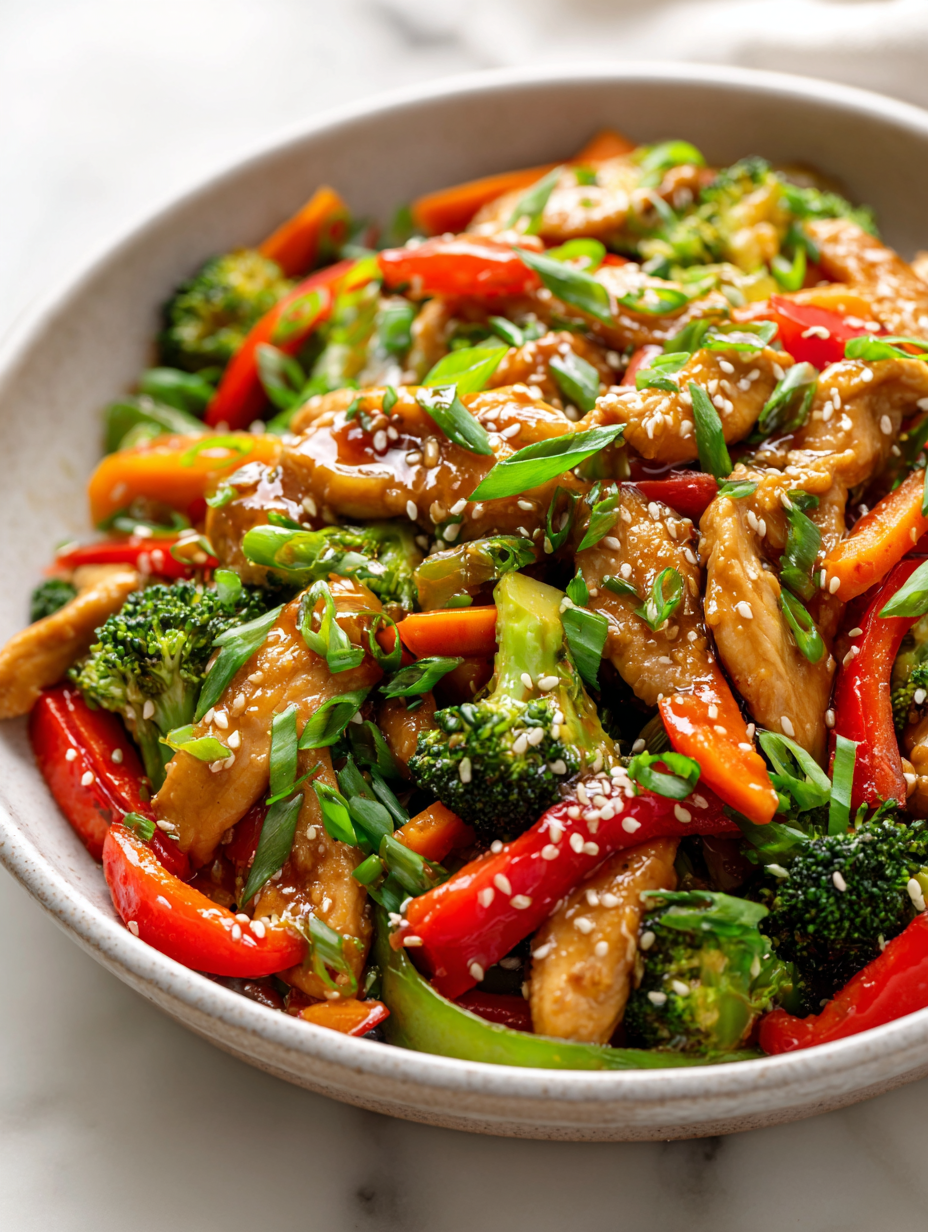
This chicken stir fry is all about balancing textures—crisp-tender vegetables with juicy, well-seasoned chicken—done in a single pan. It’s the kind of dish you can throw together in under 30 minutes, perfect for busy weeknights when you want something satisfying but not complicated.
What keeps me coming back to this recipe isn’t just the speed; it’s how the flavors come alive with each stir. The soy, garlic, and a splash of sesame oil create a glossy, aromatic sauce that clings to everything, making each bite a little burst of comfort. It’s a dish that feels both casual and just a little special, like a secret ingredient for turning simple ingredients into a real treat.
Focusing on how to achieve a perfect balance of crispy vegetables and tender chicken using only one pan, making it a quick, satisfying weeknight fix that doesn’t compromise on texture or flavor.
The art of balancing textures
- This dish reminds me of those hurried weeknights when I just need something fast but flavorful, and it never lets me down.
- I love how the sizzling sound of the vegetables hitting the hot pan instantly fills the kitchen with a rush of savory aroma.
- There’s a quiet pride in perfecting the crispy edges on the chicken without overcooking the tender inside, especially after a long day.
- Every time I make this, I feel a little nostalgic for my first apartment, where quick stir-fries kept me sane and well-fed.
- The way the sauce glazes everything, making each bite sticky and fragrant, is a small reminder that simple cooking can really satisfy.
The story behind this recipe
- This recipe started as a way to use up some leftover vegetables and chicken that were just sitting in my fridge. I wanted something quick, honest, and flexible enough to adapt to whatever I had on hand. Over the years, I’ve tweaked the sauce and cooking method until it hits that perfect balance of crispy, tender, and saucy without fuss.
- I remember a night when I was rushing home after a long day, craving something warm and satisfying but didn’t want to spend ages in the kitchen. This stir fry came together in a flash, and the smell of garlic and soy filled the apartment. It’s become my go-to for busy nights, always reliable, always flavorful.
- heading: ‘The story behind this recipe’
Historical snippets of chicken stir fry
- Chicken stir fry as we know it today has roots in Chinese cuisine, but the concept of quick, stir-fried dishes spread globally with trade routes in the 20th century.
- The dish’s emphasis on balancing crisp vegetables and tender meat reflects traditional Asian cooking principles—quick heat, high oil, and vibrant flavors—adapted over time for home cooks worldwide.
- In the 1970s, American kitchens saw a surge of stir-fry recipes thanks to the rise of wok cookware and the popularity of Chinese takeout, making it a staple weeknight dinner.
- This dish exemplifies how simple ingredients—chicken, vegetables, soy—can be transformed into a comforting, versatile meal that adapts to local tastes and ingredients.
Ingredient breakdown: key components
- Chicken breast: I prefer skinless, boneless chicken for a lean, tender bite that cooks quickly. You can swap with thighs if you like more juiciness, but watch the cooking time to avoid drying out.
- Vegetables: I love a mix of bell peppers, broccoli, and snap peas—they add color, crunch, and freshness. Feel free to use carrots or bok choy for different textures and flavors, just slice thin so they cook fast.
- Soy sauce: It’s the umami backbone. Use a good quality, naturally brewed soy for depth. If you need gluten-free, coconut aminos work but are a tad sweeter, so adjust the honey.
- Sesame oil: Just a splash adds a smoky aroma that pulls everything together. If you don’t have it, toasted peanut oil gives a similar nutty note, but skip if nut allergies are a concern.
- Garlic & ginger: The aromatics that make the dish pop. I use fresh for punch, but jarred ginger works in a pinch. Be careful not to burn the garlic—keep the heat moderate when adding it.
- Cooking oil: I usually go for vegetable or canola—neutral and high smoke point. If you prefer a nuttier flavor, try peanut oil, but avoid overly fragrant oils that can overpower the dish.
- Cornstarch: I use a small spoonful mixed with water to thicken the sauce right at the end. It gives a glossy finish. If you’re gluten-free, arrowroot works just as well, but add it slowly to avoid clumping.
Spotlight on key ingredients
Soy sauce:
- Chicken breast: I prefer skinless, boneless chicken for a lean, tender bite that cooks quickly. You can swap with thighs if you like more juiciness, but watch the cooking time to avoid drying out.
- Vegetables: I love a mix of bell peppers, broccoli, and snap peas—they add color, crunch, and freshness. Feel free to use carrots or bok choy for different textures and flavors, just slice thin so they cook fast.
- It’s the umami backbone. Use a good quality, naturally brewed soy for depth. If you need gluten-free, coconut aminos work but are a tad sweeter, so adjust the honey.
Garlic & Ginger:
- The aromatics that make the dish pop. I use fresh for punch, but jarred ginger works in a pinch. Be careful not to burn the garlic—keep the heat moderate when adding it.
- Sesame oil: Just a splash adds a smoky aroma that pulls everything together. If you don’t have it, toasted peanut oil gives a similar nutty note, but skip if nut allergies are a concern.
Notes for ingredient swaps
- Chicken: I prefer skinless, boneless chicken for quick cooking and tenderness. Swap with turkey breast for a leaner option, but watch the cooking time so it doesn’t dry out.
- Vegetables: I like bell peppers, broccoli, and snap peas for crunch and color. Substitute with sliced zucchini or mushrooms if you want a softer bite or different flavor profile.
- Soy sauce: I use a naturally brewed soy for depth. Coconut aminos make a great gluten-free alternative, though they’re a touch sweeter—adjust seasoning accordingly.
- Sesame oil: Adds a smoky, nutty aroma. If you’re out, toasted peanut oil works well, but skip if nut allergies are a concern.
- Garlic & ginger: Fresh gives a punch, but jarred ginger and pre-minced garlic are fine for convenience. Be mindful of burn risk—add at medium heat to preserve flavor.
- Cooking oil: Vegetable or canola oil are neutral and high-smoke. For nuttier flavor, try peanut oil, but keep an eye on fumes if your kitchen runs hot.
- Cornstarch: I use it to thicken the sauce, creating a glossy finish. Arrowroot powder is a good gluten-free swap—add slowly to avoid lumps.
Equipment & Tools
- Wok or large skillet: High heat, quick stir-fry, even cooking
- Chef’s knife: Precisely cut vegetables and chicken
- Cutting board: Prepare ingredients safely
- Spatula or tongs: Turn chicken and vegetables easily
- Small bowl: Mix cornstarch slurry
Step-by-step guide to stir-frying
- Gather all ingredients: chicken, vegetables, soy, garlic, ginger, oil, and cornstarch. Prepare your workspace; a clean, spacious surface helps. Have a bowl of water ready for quick cleaning if needed.
- Slice the chicken into thin strips, about 1/4 inch thick. Toss with a teaspoon of cornstarch and a pinch of salt. Set aside while you prep the vegetables.
- Chop bell peppers, broccoli florets, and snap peas into bite-sized pieces. Mince garlic and ginger finely; their aroma is key. Keep everything within arm’s reach for quick cooking.
- Heat a large, heavy skillet or wok over high heat until shimmering (~200°C/392°F). Add 1-2 tablespoons of oil. When it shimmers, you’re ready to cook.
- Add chicken in a single layer. Let it sear undisturbed for about 2 minutes until edges turn golden. Flip and cook another 2-3 minutes until cooked through. Check for a firm, slightly jiggly texture in the center.
- Push chicken to the side of the pan. Add a bit more oil if needed, then toss in garlic and ginger. Cook for 30 seconds until fragrant. Be careful not to burn; reduce heat slightly if garlic smokes or turns dark.
- Add vegetables to the pan. Stir constantly for about 2-3 minutes. Vegetables should be vibrant and slightly crisp. They’ll crackle and smell fresh and sweet when ready.
- Pour in soy sauce and a teaspoon of sesame oil. Toss everything together until vegetables are coated and slightly glossy. If sauce thickens too much, splash a little water and stir.
- If you want a thicker sauce, mix a teaspoon of cornstarch with a tablespoon of water and stir into the pan. Cook for another minute until sauce is shiny and coats the stir-fry evenly.
- Remove from heat. Rest for 1 minute, letting flavors meld. Plate with rice or noodles, and garnish with sliced scallions or sesame seeds if desired.
Let the stir-fry rest for a minute to settle flavors, then serve immediately over rice or noodles. Garnish with green onions or sesame seeds for a fresh touch.
How to Know It’s Done
- Chicken is opaque and firm with a slight jiggle in the center.
- Vegetables are vibrant, slightly crisp, with a gentle crackle when stirring.
- Sauce is glossy, coats ingredients evenly, and has a balanced savory aroma.
Simple Chicken Stir Fry
Ingredients
Equipment
Method
- Start by slicing the chicken into thin strips to ensure quick cooking and maximum tenderness. Toss the slices with a teaspoon of cornstarch for a slight coating that helps them stay juicy and crispy.
- Chop the bell peppers, broccoli florets, and snap peas into bite-sized pieces. Mince the garlic and ginger finely, so their flavors infuse the stir-fry evenly.
- Heat your wok or large skillet over high heat until shimmering, then add 1-2 tablespoons of oil. When the oil shimmers, add the chicken slices in a single layer, letting them sear undisturbed for about 2 minutes until edges turn golden brown.
- Flip the chicken and cook for another 2-3 minutes until cooked through and slightly crispy on the outside. Remove the chicken from the pan and set aside temporarily.
- Reduce the heat to medium, then add a bit more oil if needed. Toss in the minced garlic and ginger, cooking for about 30 seconds until fragrant and slightly sizzling, but not burnt.
- Add the sliced vegetables to the pan, stirring constantly to coat them in the aromatic oils. Cook for 2-3 minutes until they are vibrant in color and just starting to soften but still retain some crunch.
- Pour in the soy sauce and add a teaspoon of sesame oil for depth. Toss everything together, letting the sauce glaze the vegetables and chicken evenly. Continue cooking for another minute until everything is heated through and coated.
- Prepare a quick slurry by mixing the cornstarch with water in a small bowl. Pour this into the pan and stir constantly until the sauce thickens, glossy and coats all ingredients evenly, about 1 minute.
- Return the cooked chicken to the pan, stirring to combine everything thoroughly and heat through. The final stir-fry should look glossy, with crisp vegetables and tender chicken, ready to serve.
- Serve hot over steamed rice or noodles, garnished with sliced scallions or sesame seeds if desired. Enjoy the vibrant textures and savory flavors of this quick, satisfying dish.
Pro tips for perfect stir-fry
- Bolded mini-head: Use high heat to sear the chicken quickly, locking in juices and creating a crispy exterior.
- Bolded mini-head: Keep vegetables moving—constant stirring prevents burning and ensures even crispness.
- Bolded mini-head: Add garlic and ginger after the chicken is nearly cooked to avoid burning and bitterness.
- Bolded mini-head: Use a small amount of cornstarch slurry at the end for a shiny, thickened sauce that clings to ingredients.
- Bolded mini-head: Don’t overcrowd the pan; cook in batches if necessary to maintain high heat and proper searing.
- Bolded mini-head: Taste the sauce before serving; adjust soy or sesame oil to balance salty and nutty flavors.
- Bolded mini-head: Rest the stir-fry for a minute off the heat to let flavors meld and prevent overcooking the vegetables.
Common mistakes and how to fix them
- FORGOT to preheat the pan → Always heat until shimmering before adding ingredients.
- DUMPED all ingredients at once → Add ingredients in stages, based on cooking times.
- OVER-TORCHED the vegetables → Stir constantly and remove from heat when vibrant and crisp.
- UNDER-seasoned the sauce → Taste and adjust soy or salt before finishing.
Quick fixes and pantry swaps
- When sauce is too thick, splash in water and stir until glossy.
- If vegetables release too much water, cook in batches for better crispness.
- Splash soy sauce on the pan if stir-fry tastes bland or flat.
- Patch burnt bits by removing them quickly, then deglaze with a little water.
- Shield delicate vegetables with a lid during stir-fry to preserve color and crunch.
Prep, store, and reheat tips
- Prep vegetables and chicken: Slice everything and store in airtight containers for up to 24 hours; vegetables stay crisp and fresh.
- Marinate chicken in soy and a touch of cornstarch overnight for extra flavor and quicker cooking time.
- Cook rice or noodles ahead of time; keep refrigerated for up to 3 days. Reheat until steaming hot for serving.
- Store stir-fry leftovers in an airtight container for up to 2 days. The flavors will deepen, and vegetables may soften slightly.
- Reheat gently in a skillet over medium heat, stirring occasionally, until hot and fragrant. Expect a slightly softer texture but still tasty.
Top questions about chicken stir fry
1. How thin should I slice the chicken?
Use thinly sliced chicken breasts to ensure quick, even cooking. The key is not overcrowding the pan, so everything sears nicely and stays tender.
2. Should I marinate or coat the chicken beforehand?
Adding cornstarch or arrowroot to the chicken before cooking creates a slight coating that helps it stay juicy and crispy on the edges.
3. How hot should my pan be?
High heat is crucial—aim for about 200°C or 392°F—so the ingredients sear fast, locking in flavor and achieving that crispy texture.
4. How do I tell when the vegetables are perfectly cooked?
Vegetables should be vibrant and slightly crisp, with a crackling sound when stirred. Overcooked veggies turn dull and soggy, losing their crunch.
5. How do I make the sauce flavorful without overpowering?
Use soy sauce with good depth, and add a splash of sesame oil at the end for aroma. Adjust seasoning by tasting the sauce before adding it to everything.
6. When should I add garlic and ginger?
Stir the garlic and ginger after the chicken has cooked for about 30 seconds—this prevents burning and keeps their aroma bright.
7. My sauce is too thick, what do I do?
If the sauce gets too thick, splash in water or broth and stir until it’s glossy and coats the ingredients again. It helps keep everything saucy and vibrant.
8. Can I make this ahead and reheat?
For leftovers, store the stir-fry in an airtight container for up to 2 days. Reheat over medium heat, stirring until steaming hot, to preserve flavor and texture.
9. How do I keep the vegetables crispy?
Avoid overcrowding the pan; cook ingredients in batches if needed. Keeping the heat high and ingredients separate prevents steaming and keeps everything crisp.
10. How can I fix bland stir-fry?
If you notice the stir-fry tasting flat, add a dash more soy sauce or a squeeze of lemon to brighten the flavor instantly.
This chicken stir fry is more than just a quick meal; it’s a reminder that simple ingredients can come together in a way that’s satisfying in the moment. The aroma of garlic, the crackle of vegetables, and the glossy sauce make every plate feel like a small celebration of home cooking.
In times when I need dinner fast but still crave something flavorful, this dish always delivers. It’s honest, unpolished in its ease, and endlessly customizable—perfect for those busy nights when you want real, comforting food without the fuss.

Hi, I’m Hannah Reynolds, the heart behind Seasoning Therapist. I believe food can comfort, restore, and gently reset us after a long day. I started Seasoning Therapist with one simple idea in mind: cooking is not just about feeding the body, it is about caring for the mind too. The right seasoning can change the mood of a dish, and sometimes even the mood of the person eating it. This blog is where I combine my love for thoughtful cooking with my belief that the kitchen can be a place of healing.
