
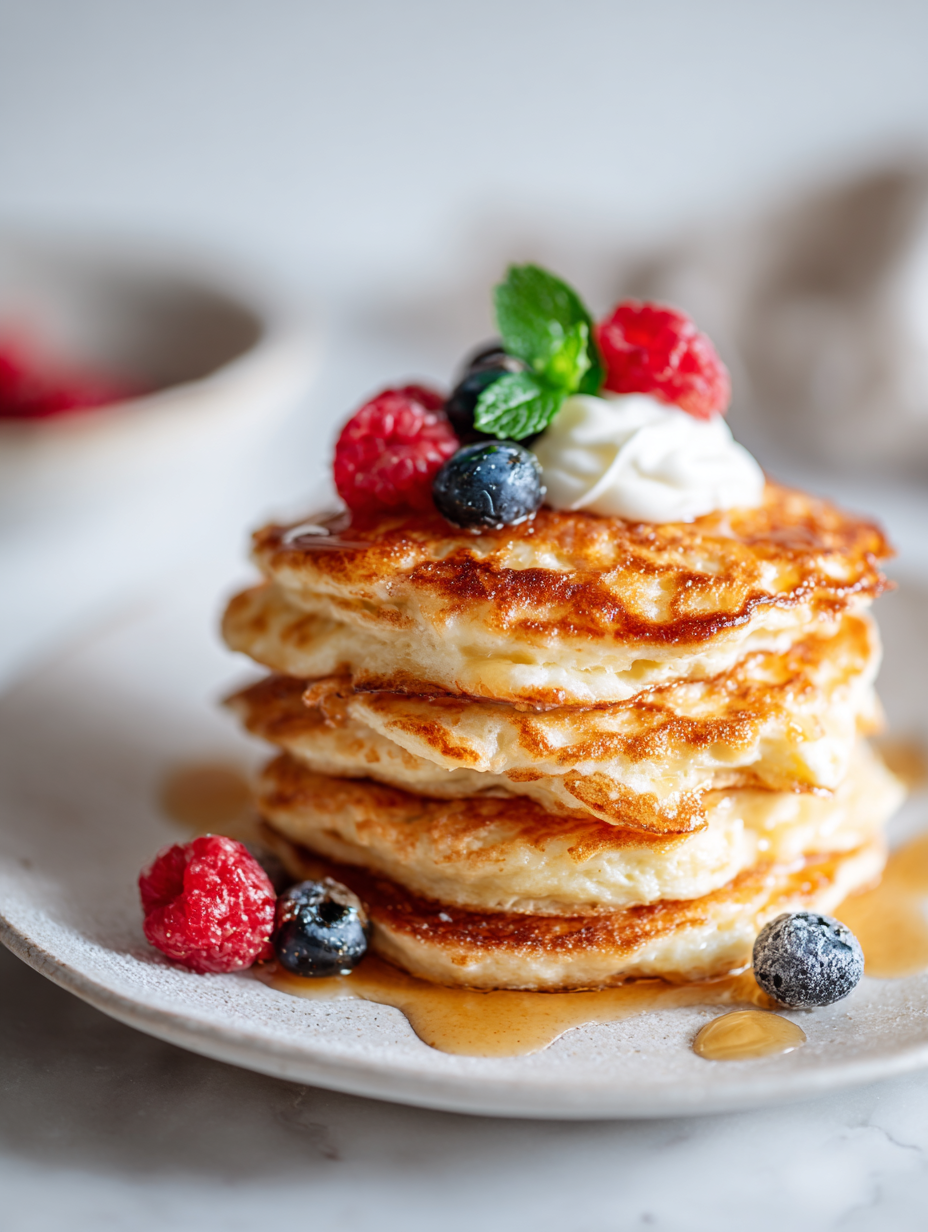
Growing up, breakfast was always a special weekend thing, and my mom’s cottage cheese pancakes were a highlight. There’s something about that tender, slightly tangy batter that feels like a warm hug on a busy morning. It’s those simple ingredients—milk, eggs, cottage cheese—that come together in a way that feels both nostalgic and surprisingly versatile.
These pancakes are not just for lazy mornings, though. They’re a reminder that good, honest food doesn’t need fancy tricks. Sometimes, the best recipes are the ones that connect us back to childhood, to the scent of butter sizzling in the pan, and to that first bite—creamy, fluffy, with a little tang. Sharing them feels like passing on a secret that’s been in my family for years.
Focusing on the comforting nostalgia of childhood breakfast tables, I see cottage cheese pancakes as a way to reconnect with simple, honest ingredients that bring a sense of warmth and familiarity to busy mornings.
A Cozy Breakfast Tradition
- Making these pancakes feels like a tiny act of rebellion against overly complicated breakfasts.
- The tangy richness of cottage cheese always surprises me how it balances sweetness and fluff.
- There’s a quiet pride in flipping that perfect golden pancake, knowing it’s simple, honest food.
- Sometimes, I add a dash of vanilla or lemon zest just to wake up the flavor—small tweaks that make a big difference.
- These pancakes remind me that comfort can be found in the most unassuming ingredients, if you treat them right.
A Cozy Breakfast Tradition
This recipe came together one rainy weekend when I was craving something comforting but different from my usual breakfast. I remember rummaging through the fridge and finding a tub of cottage cheese that needed using up, and suddenly, pancakes made with it seemed just right. There’s something about the tang and creaminess that makes these pancakes stand out, even among all the sweet, fluffy options. They feel like a little secret—unexpected, satisfying, and just a bit nostalgic.
Historical & Cultural Roots
- These pancakes harken back to Eastern European childhood breakfasts, where cottage cheese was a staple for its tangy richness.
- Historically, cottage cheese was a practical way to add protein and moisture to simple, humble pancakes before the era of processed mixes.
- The recipe gained popularity in the 1950s when dairy-rich, high-protein breakfasts became a health-conscious trend, especially in rural kitchens.
- In some regions, cottage cheese pancakes are called ‘tvorogovye bliny,’ tying them to a long tradition of dairy-based, tender pancakes.
Key Ingredients and Tips
- Cottage cheese: I love how its creamy, slightly tangy bite adds moisture and richness—try full-fat for best flavor, but low-fat works if you prefer lighter pancakes.
- Flour: I use all-purpose, but if you want a softer texture, swap in some cake flour—just remember it’ll make the batter a touch more delicate and tender.
- Eggs: They bind everything together and give structure. For a fluffier result, try extra yolks, but watch out for a denser pancake if you add too many.
- Milk: I prefer whole milk for richness; skim works fine, but the batter might be a tad stiffer. A splash of buttermilk adds a subtle tang, if you have it.
- Sweetener: Just a touch of sugar brightens the batter, but if you’re feeling savory, skip it altogether. Honey or maple syrup can add a different kind of depth if you like.
- Butter or oil: I melt butter right into the batter for flavor, but neutral oil is fine. Use enough to keep the pancakes from sticking and to develop a golden crust.
- Baking powder: It’s what makes these pancakes fluffy. Don’t forget it—if you skip, they’ll be dense and sad. Check freshness for proper rise.
Spotlight on key ingredients
Cottage cheese:
- I love how its creamy, slightly tangy bite adds moisture and richness—try full-fat for best flavor, but low-fat works if you prefer lighter pancakes.
- It behaves like tiny curds during cooking, creating a tender, moist texture that surprises with every bite.
Flour:
- I use all-purpose, but if you want a softer texture, swap in some cake flour—just remember it’ll make the batter a touch more delicate and tender.
- It provides structure but can turn gluey if overmixed, so fold gently and don’t overdo it.
Notes for ingredient swaps
- Dairy-Free: Swap cottage cheese for blended silken tofu or coconut yogurt. It changes the tang and creaminess but keeps the batter moist.
- Gluten-Free: Use a 1:1 gluten-free flour blend. Expect a slightly denser pancake, but still tender and satisfying.
- Sweetener: Replace sugar with honey or maple syrup for richer flavor. Adjust liquid slightly if batter feels thick.
- Milk: Almond or oat milk work well. Use unsweetened for a neutral taste, or vanilla-flavored for added warmth.
- Eggs: Flaxseed meal or chia seeds mixed with water can replace eggs. Expect a slightly earthier flavor and denser texture.
- Flour: Whole wheat or spelt flour can be used for more nutty, hearty pancakes. They might be a bit denser and darker.
- Butter/Oil: Use coconut oil or applesauce for a milder flavor. Keep in mind this may affect the richness and crispness.
Equipment & Tools
- Non-stick skillet or griddle: To cook pancakes evenly without sticking.
- Spatula: To flip and handle pancakes gently.
- Mixing bowls: To combine ingredients separately and then fold.
- Whisk: To blend wet ingredients smoothly.
- Measuring cups and spoons: For accurate ingredient portions.
Step-by-step Guide to Cottage Cheese Pancakes
- Gather your equipment: a non-stick skillet or griddle, a spatula, a mixing bowl, a whisk, and a measuring cup. Preheat your pan over medium heat (~160°C / 320°F).
- In the mixing bowl, combine 1 cup of all-purpose flour, 1 teaspoon baking powder, and a pinch of salt. Whisk to blend. Set aside.
- In a separate bowl, whisk together 2 large eggs, 1 cup cottage cheese, 1/4 cup milk, and 1 tablespoon sugar (if using). Ensure the cottage cheese is broken up and creamy.
- Pour the wet ingredients into the dry, gently folding until just combined. Do not overmix; a few lumps are fine. Let the batter rest for 5 minutes; this helps gluten development and results in fluffier pancakes.
- Lightly grease the skillet with a small amount of butter or oil. When the pan is hot (a drop of water sizzles), ladle about 1/4 cup of batter per pancake onto the surface.
- Cook for 2-3 minutes, until bubbles form on the surface and the edges look set. The underside should be golden brown. If not, adjust the heat slightly.
- Flip carefully with a spatula. Cook the second side for another 2 minutes until evenly golden and cooked through. Check the bottom for a deep amber color.
- Remove the pancakes and place on a plate. Cover loosely with foil to keep warm, or serve immediately. Rest for a minute before serving to settle the texture.
- Final check: the pancakes should be golden, slightly crisp on the edges, and tender inside. The batter should jiggle slightly but hold together well when flipped.
- Serve with your favorite toppings—syrup, fresh berries, or a dollop of extra cottage cheese. Enjoy the warm, tangy contrast with every bite.
Let the batter rest for 5 minutes to improve fluffiness. Serve pancakes hot, stacked on a plate, with toppings of choice. Drizzle with syrup or dollop with extra cottage cheese for added richness.
How to Know It’s Done
- Pancakes are golden and slightly crisp on edges.
- Bubbles appear on surface before flipping.
- Inner texture is fluffy and cooked through when tested with a toothpick or skewer.
Cottage Cheese Pancakes
Ingredients
Equipment
Method
- Gather your equipment and preheat a non-stick skillet over medium heat until warm.
- In a large mixing bowl, whisk together the flour, baking powder, salt, and sugar until evenly combined. This creates a light, airy base for the batter.
- In a separate bowl, beat the eggs until they’re slightly frothy, then stir in the cottage cheese, milk, and melted butter until smooth and well combined. The mixture should be creamy with small curds from the cottage cheese visible.
- Gently fold the wet mixture into the dry ingredients using a spatula, mixing just until combined. Be careful not to overmix—the batter should be slightly lumpy but cohesive, with a thick but pourable consistency.
- Let the batter rest for 5 minutes; this relaxes the gluten and helps the pancakes become fluffier. During this time, the mixture will thicken slightly and develop a richer aroma.
- Lightly grease the preheated skillet with a small amount of melted butter or oil. Once shimmering, pour about 1/4 cup of batter per pancake onto the skillet, spacing them apart.
- Cook the pancakes for about 2-3 minutes, until bubbles form on the surface and the edges look set. The underside should be golden and slightly crisp.
- Carefully flip each pancake with a spatula, then cook for another 2 minutes until evenly golden brown and cooked through. The pancakes will smell rich and buttery, with a tender interior.
- Remove the cooked pancakes and place them on a plate. Keep warm while you cook the remaining batter, adding more butter to the skillet as needed.
- Serve the pancakes hot with your favorite toppings—syrup, fresh berries, or a dollop of extra cottage cheese—enjoying the warm, tender, and slightly tangy bites.
Pro tips for fluffy cottage cheese pancakes
- Bolded Tip: Use a gentle fold when combining ingredients to keep the batter airy and prevent deflation.
- Bolded Tip: Rest the batter for 5 minutes; this relaxes gluten and results in fluffier pancakes.
- Bolded Tip: Cook over medium heat (~160°C / 320°F); too hot and they burn, too low and they flatten.
- Bolded Tip: Flip when bubbles appear on the surface and edges look slightly set—crisp but not burnt.
- Bolded Tip: For an extra tender crumb, add a tablespoon of sour cream or yogurt into the batter before cooking.
- Bolded Tip: Keep pancakes warm by placing cooked ones in a low oven (around 90°C / 200°F) while finishing the batch.
- Bolded Tip: If batter thickens after resting, stir in a splash of milk to loosen it before cooking.
Common mistakes and how to fix them
- FORGOT to check pancake consistency → Batter should be thick but pourable, not runny.
- DUMPED too much flour → Use the recommended amount; too much makes pancakes dense.
- OVER-TORCHED the pancakes → Cook over medium heat, adjusting as needed to avoid burning.
- SKIPPED resting time → Let batter sit 5 minutes for better fluffiness and easier flipping.
Quick fixes and pantry swaps
- When batter is too thick, splash in a little milk to loosen it quickly.
- If pancakes stick, splash some water in the pan and wipe with a paper towel.
- DUMPED too much flour? Scoop out excess and add a splash more milk to balance.
- When pancakes are over-torched, shield with a lid or lower heat immediately.
- Splash a few drops of lemon juice or vanilla extract if the batter tastes flat.
Prep, store, and reheat tips
- Prepare the dry ingredients and mix the batter a day in advance; keep refrigerated, covered tightly. The batter will develop a richer tang overnight.
- Cook the pancakes fresh for best texture, but if needed, store cooled pancakes in an airtight container in the fridge for up to 24 hours. They may lose some fluffiness but stay tender.
- Reheat in a warm skillet over low heat or in a 180°C (350°F) oven for a few minutes until warmed through. Expect a slight change in texture—less crisp, more tender.
- Reheated pancakes will have a softer bite; for a crispy exterior, briefly pan-fry in a little butter before serving. The aroma of warm butter and toasted edges is worth it.
Top questions about cottage cheese pancakes
1. Can I use low-fat cottage cheese?
Use full-fat cottage cheese for a creamier, more tender pancake. Low-fat works but might be less moist.
2. Can I make these dairy-free?
Yes, you can swap milk with almond or oat milk. It won’t be as rich but still tasty.
3. What temperature should I cook the pancakes?
Cook on medium heat (~160°C / 320°F). Too hot and they burn; too low and they turn flat.
4. Do I need to rest the batter?
Let the batter rest for at least 5 minutes to improve fluffiness and easier flipping.
5. When should I flip the pancakes?
Flip when bubbles appear on top and edges look set, about 2-3 minutes into cooking.
6. How should I store leftovers?
Store cooled pancakes in an airtight container in the fridge for up to 24 hours. Reheat gently in a skillet or oven.
7. How can I boost the flavor of the batter?
Add a splash of lemon juice or vanilla extract to enhance flavor if the batter tastes flat.
8. What equipment do I need?
Use a non-stick skillet or griddle for even cooking and easy flipping. Preheat well before adding batter.
9. What if my pancakes stick to the pan?
If pancakes stick, splash some water in the pan and wipe with a paper towel to cool and clean.
10. How can I keep the pancakes fluffy?
Over-mixing makes pancakes dense; fold the ingredients gently to keep the batter airy.
These cottage cheese pancakes aren’t just breakfast—they’re a little reminder that simple ingredients can hold so much warmth and flavor. Each bite carries a tangy richness that’s hard to replicate with anything store-bought or overly processed.
In a world where mornings often rush by, taking the time to make these feels like reclaiming a quiet, honest moment. They’re imperfect, cozy, and just the right touch of nostalgia—perfect for whatever kind of morning you’re facing.

Hi, I’m Hannah Reynolds, the heart behind Seasoning Therapist. I believe food can comfort, restore, and gently reset us after a long day. I started Seasoning Therapist with one simple idea in mind: cooking is not just about feeding the body, it is about caring for the mind too. The right seasoning can change the mood of a dish, and sometimes even the mood of the person eating it. This blog is where I combine my love for thoughtful cooking with my belief that the kitchen can be a place of healing.
