
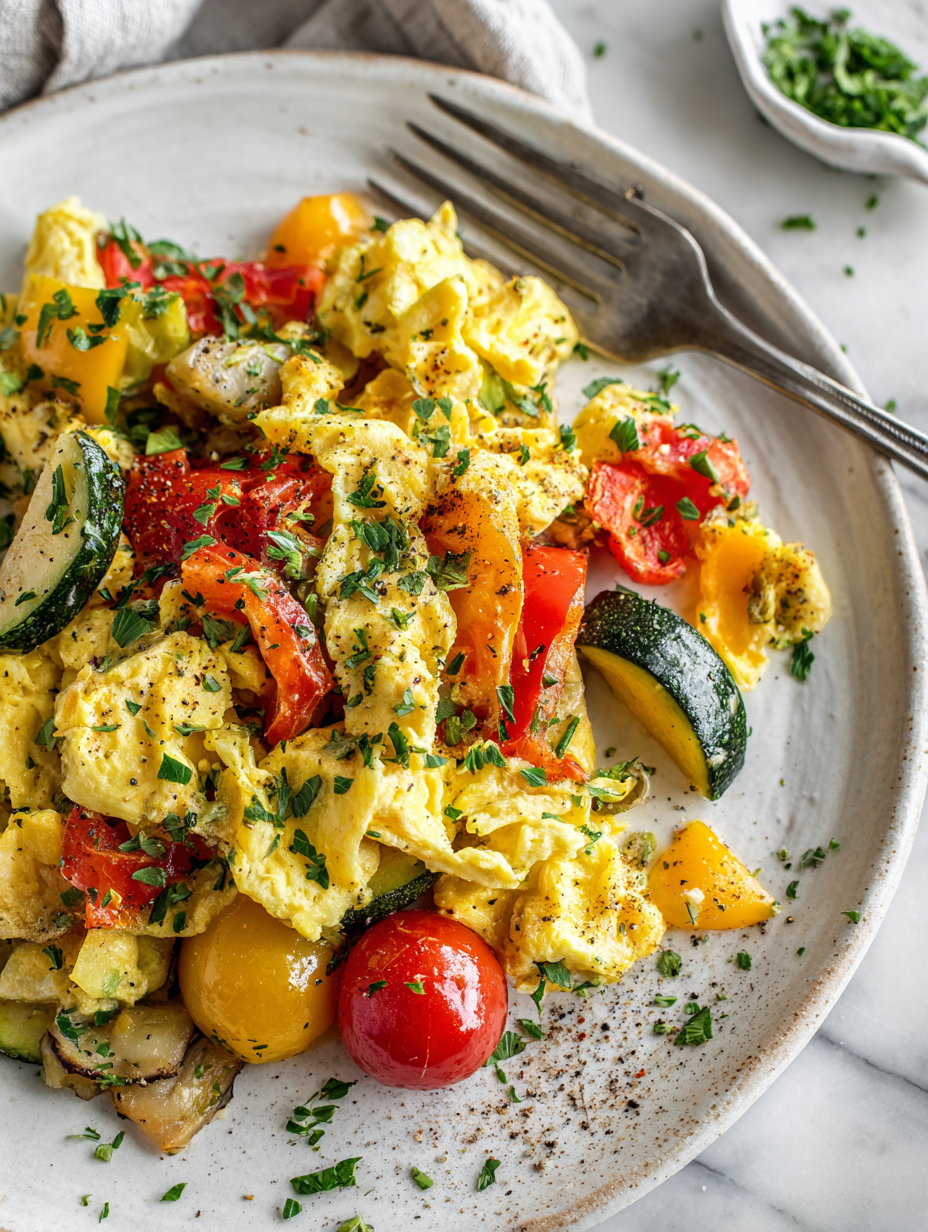
Using leftover roasted vegetables in scrambled eggs might sound simple, but it’s a little secret weapon for busy mornings. Those caramelized bits add a smoky depth that fresh veggies just can’t match, turning a basic breakfast into something more satisfying. It’s like repurposing your fridge’s leftovers into a warm, comforting plate that feels both clever and comforting.
This recipe is my go-to when I want something quick yet full of flavor. No need to cook veggies from scratch—just grab what’s lurking in the fridge. The best part? Every batch feels a little different, depending on what you have, making breakfast a bit more interesting than your usual scramble.
Focusing on using leftover roasted vegetables for a quick, flavorful scramble that turns everyday ingredients into a satisfying breakfast.
Transforming Leftovers into Breakfast
- I love how a splash of leftover roasted veggies can make breakfast feel like a small celebration.
- There’s a quiet joy in turning fridge scraps into something warm and satisfying, almost like magic.
- Sometimes I feel proud that I’m sneaking in extra greens without anyone noticing.
- Messing up the scramble used to frustrate me, but now I see it as part of the charm—more forgiving somehow.
- That first bite—bright, smoky, with just enough creamy eggs—never fails to start my day right.
The story behind this recipe
One morning, I was rummaging through my fridge, spotting a mix of leftover roasted vegetables. Instead of letting them sit, I threw them into eggs, and that smoky, sweet flavor transformed my usual scramble. It became a habit—using what I had to make breakfast feel a little more special, a little more real. Over time, I realized these veggie bits, memories of previous nights, add a depth I can’t get from fresh alone.
History and Fun Facts
- Eggs have been a dietary staple for thousands of years, with evidence of their consumption dating back to ancient civilizations.
- The practice of mixing vegetables with eggs likely originated as a way to stretch ingredients during hard times, turning simple leftovers into hearty meals.
- In many cultures, scrambled eggs with vegetables is considered comfort food, often linked to family mornings and nostalgic kitchen smells.
Ingredient breakdown: key components
- Bell peppers: I love the sweetness of red peppers, but yellow or orange add a brighter pop. Use what’s ripe and fragrant—those olfactory cues make a difference.
- Eggs: Fresh eggs are key—look for a clean, slightly runny yolk. If they crack and run smoothly, you’re set for a silky scramble.
- Onion: I prefer yellow onion for its mellow sweetness, but shallots give a more delicate flavor—both should smell sweet and slightly pungent when cooked.
- Spinach: Wilted greens add moisture and a slight bitterness. If you’re not into it, kale works too, just chop finely and cook longer until tender.
- Cheese: A sprinkle of sharp cheddar or creamy feta can elevate the dish. The cheese should melt smoothly, adding a gooey, salty richness—go with what you love.
- Olive oil: Use a good splash for sautéing—look for a fruity or peppery note. Skip if you prefer a non-oil scramble, but the oil adds a lovely sheen.
- Salt & pepper: Always taste before seasoning. Freshly cracked pepper and a pinch of sea salt heighten all the flavors and bring the veggies alive.
Spotlight on key ingredients
Bell peppers:
- I love the sweetness of red peppers, but yellow or orange add a brighter pop. Use what’s ripe and fragrant—those olfactory cues make a difference.
- Eggs: Fresh eggs are key—look for a clean, slightly runny yolk. If they crack and run smoothly, you’re set for a silky scramble.
- Onion: I prefer yellow onion for its mellow sweetness, but shallots give a more delicate flavor—both should smell sweet and slightly pungent when cooked.
Eggs:
- Fresh eggs are key—look for a clean, slightly runny yolk. If they crack and run smoothly, you’re set for a silky scramble.
- Onion: I prefer yellow onion for its mellow sweetness, but shallots give a more delicate flavor—both should smell sweet and slightly pungent when cooked.
Notes for ingredient swaps
- Dairy-Free: Swap regular cheese for nutritional yeast or dairy-free cheese. Expect a nuttier, less gooey finish.
- Vegan: Use tofu scramble instead of eggs, seasoned well for richness and texture. It’s a different vibe but filling.
- Oil Alternatives: Coconut oil or avocado oil can replace olive oil. They add subtle flavor but maintain good heat stability.
- Leftover Veggies: Any cooked or roasted vegetables work—think mushrooms, kale, or even roasted sweet potatoes for sweetness.
- Cheese: Feta, goat cheese, or shredded mozzarella can be used. Each melts differently—feta adds tang, mozzarella gooeyness.
- Herbs & Spices: Fresh parsley, chives, or basil brighten the dish. Dried herbs work too but are less vibrant.
- Salt & Pepper: Consider smoked sea salt or freshly cracked pink peppercorns for a flavor boost—less is more, taste as you go.
Equipment & Tools
- Non-stick skillet: Cook the eggs evenly without sticking
- Spatula: Gently stir and fold the eggs for a soft scramble
- Small bowl: Whisk the eggs in before cooking
- Whisk or fork: Beat the eggs thoroughly
Step-by-step guide to scramble
- Gather your equipment: a non-stick skillet, a spatula, a small bowl, and a whisk or fork. The skillet should be around 20cm (8 inches), heat-resistant handle.
- Crack 3-4 eggs into the bowl. Whisk vigorously for about 20 seconds until fully combined and slightly frothy. Set aside.
- Prepare vegetables: chop leftover roasted peppers, zucchini, or any leftover veggies into small, even pieces. Aim for 1/2 cup total.
- Heat the skillet over medium-low (about 150°C/300°F). Add a splash of olive oil or a small pat of butter. When it shimmers or melts, you’re ready.
- Add the veggies to the skillet. Sauté for 2-3 minutes until heated through and slightly caramelized, with a gentle crackling sound.
- Lower heat to medium-low. Pour the beaten eggs evenly over the veggies. Let sit for 10 seconds, then start gently stirring with the spatula.
- Scramble slowly, pushing eggs from the edges toward the center. Cook for about 1-2 minutes, watching for a soft, moist curd. The eggs should look slightly glossy and not runny.
- Check doneness: the eggs should be just set but still tender. If they start to look too dry or brown, reduce heat or remove from heat.
- Remove from heat. Let rest for 30 seconds to allow residual heat to finish cooking. Plate immediately, garnishing with fresh herbs if desired.
- Serve warm, with a side of crusty bread or fresh greens. The scramble should be fluffy, moist, and flavorful with gentle smoky undertones.
Let the scramble rest for 30 seconds off heat. Serve immediately on a warm plate, garnished with herbs or cheese if desired.
How to Know It’s Done
- Eggs are softly set but not dry or rubbery.
- Veggies are heated through, slightly caramelized, and fragrant.
- Scrambled eggs have a shiny, moist appearance with no excess liquid.
Leftover Roasted Vegetable Scrambled Eggs
Ingredients
Equipment
Method
- Crack the eggs into a small bowl and whisk vigorously for about 20 seconds until fully blended and slightly frothy. Set aside.
- Chop your leftover roasted vegetables into small, even pieces to ensure they heat through evenly in the scramble.
- Heat the non-stick skillet over medium-low heat. Add a tablespoon of olive oil and let it shimmer, filling the air with a subtle fruity aroma.
- Add the chopped roasted vegetables to the skillet. Sauté for 2-3 minutes until they are heated through, fragrant, and slightly caramelized, with a gentle crackling sound.
- Reduce the heat to medium-low. Pour the beaten eggs evenly over the vegetables, allowing them to spread out and start to set at the edges.
- Let the eggs sit for about 10 seconds, then gently start stirring with a spatula, pushing cooked parts from the edges toward the center.
- Continue gently stirring and folding the eggs for 1-2 minutes until they are softly set but still moist and glossy, with no excess liquid.
- Sprinkle shredded cheddar cheese over the eggs, then cook for another 30 seconds until the cheese melts into the scramble.
- Remove the skillet from heat and let the scramble rest for 30 seconds to finish setting. Season with salt and freshly cracked pepper to taste.
- Gently scoop the fluffy, creamy scramble onto plates, showing off the colorful bits of roasted vegetables and melted cheese for a vibrant presentation.
- Enjoy your quick, flavorful breakfast, ideally with a side of toast or greens for a complete meal.
Notes
Pro tips for perfect scramble
- Use medium-low heat to gently cook the eggs, preventing them from turning rubbery and ensuring a creamy texture.
- Add veggies when the pan is just hot enough; wait for a gentle sizzle to avoid sogginess and promote caramelization.
- Stir slowly and steadily; this creates soft curds and prevents over-agitating, which can make the eggs tough.
- For extra fluffiness, remove the eggs from heat slightly before they are fully set, letting residual heat finish the job.
- Season with salt and pepper at the end; salting too early can break down eggs and make them watery.
- Incorporate cheese or herbs just before serving; this preserves their fresh flavors and prevents melting into a dull mass.
- Rest the scramble for a few seconds off heat before plating; this helps set the eggs and enhances their creamy consistency.
Common mistakes and how to fix them
- FORGOT to monitor heat: eggs scramble faster and can overcook if heat is too high. Reduce and stir gently.
- DUMPED all vegetables in at once: add in stages for even heat and better caramelization.
- OVER-TORCHED eggs: remove from heat early; residual warmth finishes cooking for soft texture.
- MISSED seasoning: taste before serving; add salt or pepper as needed to enhance flavor.
Quick fixes and pantry swaps
- If eggs look watery, splash in a little milk and stir quickly.
- When vegetables stick or burn, shield the pan with a lid and lower heat.
- Splash a pinch of salt if eggs turn rubbery—helps regain moisture.
- Patch over overcooked eggs with a dollop of sour cream or ricotta for creaminess.
- When pantry lacks fresh peppers, swap with jarred roasted peppers—smoky flavor still shines.
Prep, store, and reheat tips
- Prep vegetables ahead by chopping and storing in an airtight container; they’ll keep crisp in the fridge for up to 2 days, ready to heat and add in.
- Cooked eggs can be stored in a sealed container in the fridge for up to 3 days. Reheat gently in a skillet over low heat, watching for steam and a slight shimmer to the surface.
- Leftover scrambled eggs tend to firm up and lose some creaminess; adding a splash of water or milk during reheating helps revive their softness.
- For best flavor, consume within 24 hours. After that, the eggs may develop a slightly rubbery texture and a less vibrant flavor. Reheat until just warmed through, not hot to preserve texture.
Top questions about scrambled eggs with vegetables
1. Can I use fresh vegetables instead of leftovers?
Use leftover roasted vegetables for a smoky, caramelized flavor that fresh veggies can’t match. It’s like adding a secret depth to your scramble.
2. Should I cook fresh vegetables first?
Yes, just sauté fresh veggies until tender and slightly caramelized before mixing with eggs for the best flavor.
3. How do I make the eggs fluffier?
Adding a splash of milk or cream to your eggs makes them creamier, but keep it minimal to avoid dilution of flavor.
4. What’s the best temperature for cooking scrambled eggs?
Cook on medium-low heat and stir gently. Rushing the process on high heat can lead to rubbery eggs.
5. When should I add salt and pepper?
Season the eggs at the end of cooking to prevent them from becoming watery or tough. Taste and adjust before serving.
6. What tools are best for scrambling eggs?
Use a non-stick skillet for easy stirring and to prevent sticking. A silicone spatula helps create soft, curdy eggs.
7. Can I prepare scrambled eggs in advance?
Store leftovers in an airtight container in the fridge for up to 3 days. Reheat gently to preserve texture.
8. Should I add cheese before or after cooking?
Add a sprinkle of cheese or fresh herbs just before serving to keep flavors vibrant and fresh.
9. What if my eggs are overcooked or dry?
If eggs turn out rubbery, add a splash of water or milk and cook on lower heat to soften and refresh the texture.
10. Why use leftover veggies instead of fresh ones?
Incorporate leftover roasted vegetables for a quick, flavorful breakfast that feels hearty and satisfying without extra effort.
Making scrambled eggs with vegetables is a reminder that simple ingredients can turn into something satisfying with a bit of patience and care. It’s a dish that’s adaptable, forgiving, and always welcoming, especially when you’re short on time but craving comfort. Every batch feels personal, shaped by what’s in the fridge and your mood that morning.
In the end, it’s about those quiet moments in the kitchen—stirring softly, smelling the warm aroma, and tasting for balance. That little bit of chaos, the accidental caramelization, and the gentle scramble all come together to create a breakfast that’s truly yours. And honestly, that’s what makes it worth coming back to again and again.

Hi, I’m Hannah Reynolds, the heart behind Seasoning Therapist. I believe food can comfort, restore, and gently reset us after a long day. I started Seasoning Therapist with one simple idea in mind: cooking is not just about feeding the body, it is about caring for the mind too. The right seasoning can change the mood of a dish, and sometimes even the mood of the person eating it. This blog is where I combine my love for thoughtful cooking with my belief that the kitchen can be a place of healing.
