
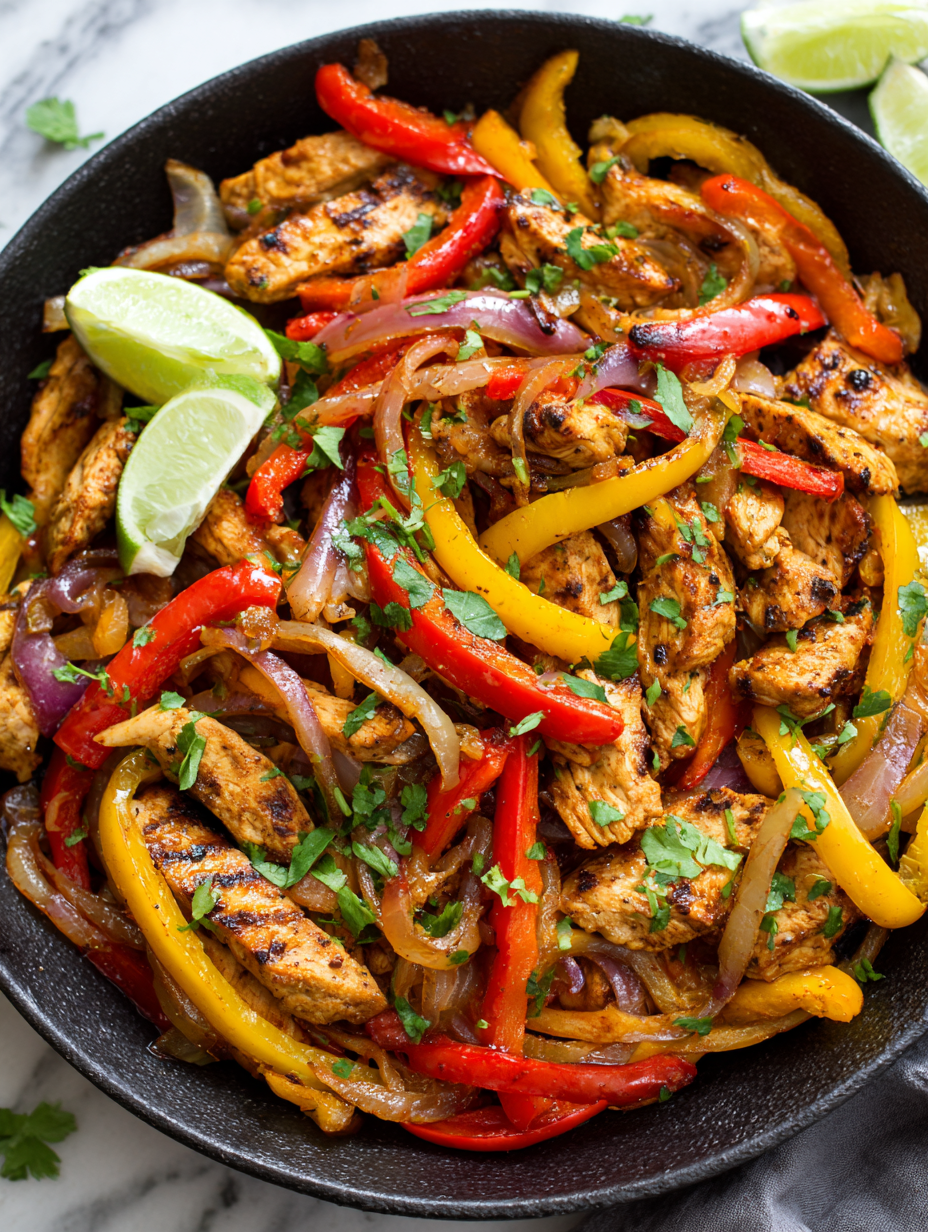
Getting those peppers and onions just right can totally change the vibe of a chicken fajita skillet. It’s about coaxing out a smoky sweetness that balances perfectly with the savory chicken and spices. I’ve made this dish a hundred times, tweaking the heat and timing until those bell peppers turn tender-crisp and caramelized around the edges, with onions that are soft and jammy but still holding their shape.
This isn’t just about quick cooking; it’s about patience and attention to those little moments. When the peppers start to smell sweet and smoky, you know you’re on the right track. It’s a messy, flavorful process that rewards you with a skillet of tender, caramelized goodness—perfect for a weeknight dinner that feels a little more special.
Focusing on how to achieve perfect caramelized peppers and onions that elevate the chicken fajita skillet, turning a simple dish into a smoky, sweet, and savory symphony.
The art of smoky caramelization
- This dish reminds me of summer nights grilling with friends, where the smoky peppers always stole the show.
- I used to rush through fajitas, but now I savor each step, especially those caramelized onions that turn golden and sweet.
- There’s a quiet pride in mastering the perfect sear on the chicken, making every bite tender and flavorful.
- Sometimes, I get lost in the aroma of spices sizzling—those moments make cooking feel like an old, familiar ritual.
The spark behind this dish
- This recipe came together after a summer trip to Mexico where the vibrant flavors of street fajitas made me crave something quick, smoky, and deeply satisfying. I wanted to make a skillet version that captures that essence without fussing with too many ingredients or complicated techniques.
- One evening, I was rushing home from work, craving comfort but also something fresh and lively. I threw together what I had—bell peppers, onions, chicken, and a handful of spices—and watched those peppers blister and turn smoky on the edges. That moment of smell and sizzle felt like a little victory, and I knew I had to write this down.
- heading
- The spark behind this dish
Fajita Origins and Fun Facts
- Fajitas originated in the border regions of northern Mexico and southern Texas, blending indigenous and Spanish influences.
- The dish gained popularity in the United States in the 1960s, especially as a casual, colorful way to serve grilled meats and vegetables.
- The term ‘fajita’ originally referred to the skirt steak cut, but now encompasses a variety of grilled meats and vegetable combinations.
- This skillet-style version is inspired by traditional fajitas but adapted for quick weeknight cooking in a single pan.
- The smoky, caramelized peppers and onions are crucial to capturing the authentic fajita flavor, often achieved over open flames traditionally.
Ingredient breakdown: key components
- Bell peppers: I love the sweet, smoky aroma when they start to blister and char around the edges—skip the chill, aim for a good sear, and let them soften just enough to still have a bite.
- Onions: Their jammy sweetness really comes through when cooked slowly over medium-high heat until golden and fragrant—don’t rush this step or they’ll turn bitter or burn. Use a sharp knife for quick, even slices.
- Chicken: I prefer boneless, skinless thighs for juiciness, seared until golden, then sliced thin—if they release too much liquid, turn up the heat to get a nice crust without steaming.
- Spices: A mix of chili powder, cumin, and smoked paprika gives that authentic fajita flavor—feel free to add a pinch of cayenne if you like heat, or skip for milder notes.
- Lime juice: Brightens everything with zesty, citrus punch—squeeze fresh right before serving, or it can turn bitter if left on the heat too long. Use a good, juicy lime.
- Oil: I reach for a neutral oil with a high smoke point like canola or vegetable, so the peppers and chicken get a good sear without smoking excessively. A splash of avocado oil works well too.
- Optional extras: Fresh cilantro or sliced jalapeños add extra pop—toss them in at the end for vibrant freshness or a spicy kick.
Spotlight on key ingredients
Bell peppers:
- I love the sweet, smoky aroma when they start to blister and char around the edges—skip the chill, aim for a good sear, and let them soften just enough to still have a bite.
- Onions: Their jammy sweetness really comes through when cooked slowly over medium-high heat until golden and fragrant—don’t rush this step or they’ll turn bitter or burn. Use a sharp knife for quick, even slices.
Chicken:
- I prefer boneless, skinless thighs for juiciness, seared until golden, then sliced thin—if they release too much liquid, turn up the heat to get a nice crust without steaming.
- Lime juice: Brightens everything with zesty, citrus punch—squeeze fresh right before serving, or it can turn bitter if left on the heat too long. Use a good, juicy lime.
Notes for ingredient swaps
- Dairy-Free: Swap sour cream for a coconut-based alternative. It adds creaminess without dairy, but expect a subtly different tang.
- Vegetarian: Use sliced portobello mushrooms or zucchini strips instead of chicken. They bring a smoky, earthy flavor and hold up well in the skillet.
- Gluten-Free: Serve with corn tortillas or lettuce wraps instead of flour tortillas. They add a different texture and a slightly sweeter flavor.
- Low-Sodium: Opt for unsalted spices and rinse canned peppers if using jarred. It helps control salt without losing flavor.
- Extra Heat: Add a dash of hot sauce or sliced jalapeños during cooking for a fiery kick. It intensifies the smoky spices and elevates the dish.
- Sweetness: Incorporate a small dash of honey or agave into the peppers and onions as they cook. It enhances caramelization and adds a subtle sweetness.
- Lime Sub: Use lemon juice if you don’t have lime. It brightens the dish with a slightly different citrus note.
Equipment & Tools
- Large skillet: For searing and cooking all ingredients in one pan.
- Tongs: To flip and toss the chicken and vegetables without breaking them.
- Sharp knife: For clean, even slicing of peppers, onions, and chicken.
- Cutting board: A stable surface for prepping vegetables and chicken.
Step-by-step guide to skillet fajitas
- Gather your equipment: a large skillet (preferably cast iron), tongs, a sharp knife, and a cutting board. Preheat the skillet over medium-high heat, around 200°C (390°F).
- Slice 3 bell peppers into thin strips, aiming for uniform pieces. Slice 1 large onion into half-moons. Set aside.
- Pat 2 chicken breasts or thighs dry with paper towels. Slice into thin strips, about 1.5 cm (0.6 inches) thick. Season generously with salt, pepper, 1 teaspoon chili powder, 1 teaspoon cumin, and 1 teaspoon smoked paprika.
- Add 1-2 tablespoons oil to the hot skillet. Once shimmering, add the chicken strips. Cook undisturbed for 3-4 minutes until well browned on one side.
- Flip the chicken and cook for another 2-3 minutes until cooked through (internal temp should reach 75°C/165°F). Remove chicken and set aside.
- In the same skillet, add a little more oil if needed. Toss in the sliced peppers and onions. Cook, stirring occasionally, for about 8-10 minutes. The vegetables should blister, soften, and develop a smoky aroma. If they start to burn, reduce heat slightly.
- During the last 2 minutes of cooking, add the cooked chicken back to the skillet. Stir to combine, allowing flavors to meld. Squeeze fresh lime juice over the mixture for brightness.
- Taste and adjust seasoning if necessary. Remove from heat. Let rest for a minute to allow juices to settle.
- Serve hot, straight from the skillet, garnished with chopped cilantro if desired. For a complete fajita experience, serve with warm tortillas and your favorite toppings.
Once cooked, let the skillet rest off the heat for 1 minute. Serve immediately, garnished with cilantro or lime wedges. Keep warm and flavorful for a satisfying meal.
How to Know It’s Done
- Chicken is fully cooked with no pink center and an internal temperature of 75°C (165°F).
- Vegetables are tender with slight charring and smoky aroma, but not burnt.
- The mixture is hot, fragrant, and slightly caramelized around the edges, indicating proper searing.
Skillet Chicken Fajitas with Caramelized Peppers and Onions
Ingredients
Equipment
Method
- Start by slicing the bell peppers into thin strips and the onion into half-moons. Set aside. Pat the chicken thighs dry and slice into thin strips. Mix together the spices: chili powder, cumin, smoked paprika, salt, and pepper.
- Heat a large skillet over medium-high heat until shimmering. Add a tablespoon of oil and swirl to coat the pan. Once hot, add the chicken strips, spreading them out in a single layer. Let them sear undisturbed for 3-4 minutes until golden on one side.
- Flip the chicken with tongs and cook for another 2-3 minutes until cooked through and browned. Remove the chicken from the skillet and set aside on a plate.
- Add a little more oil if needed, then toss in the sliced peppers and onions. Cook, stirring occasionally, for about 8-10 minutes. You'll see the peppers blister and darken at the edges, releasing a smoky aroma, while the onions soften and turn jammy.
- Once the vegetables are tender and slightly charred, return the cooked chicken to the skillet. Toss everything together to combine and let cook for another minute so the flavors meld. Squeeze fresh lime juice over the mixture for brightness and stir well.
- Taste the mixture and adjust seasoning with more salt, pepper, or lime juice if needed. Turn off the heat and let the skillet rest for a minute. Serve hot, garnished with fresh cilantro or sliced jalapeños if desired, wrapped in warm tortillas or over rice.
Pro tips for perfect fajita skillet
- sear: Ensure the skillet is hot enough (around 200°C/390°F) before adding chicken for a golden crust.
- Sweet aroma: Let peppers blister and char in the pan, releasing a smoky, sweet scent that signals caramelization.
- Layered cooking: Cook chicken first, then set aside; cook peppers and onions in the same pan to build flavor.
- Proper slicing: Use a sharp knife for thin, even strips of peppers, onions, and chicken to promote even cooking.
- Bright finish: Squeeze fresh lime juice over the skillet just before serving to lift all the smoky, savory flavors.
- Avoid steam: Don’t overcrowd the pan; cook in batches if necessary to prevent steaming and to get good caramelization.
- Timing: Keep an eye on the vegetables—they should be tender with a slight char, not mushy or burnt.
Common mistakes and how to fix them
- FORGOT to preheat the skillet → Always heat the pan first for proper searing.
- DUMPED all ingredients in at once → Cook in stages for better caramelization and texture.
- OVER-TORCHED peppers → Stir frequently and reduce heat to prevent burning.
- UNDER-seasoned chicken → Taste and adjust spices before finishing to boost flavor.
Quick fixes and pantry swaps
- When peppers burn, splash with a little water and scrape up the smoky bits.
- If chicken sticks, let it sear longer before flipping for easier release.
- DUMPED too much oil? Blot with paper towels before continuing.
- Overcooked peppers? Patch with a squeeze of lemon for brightness.
- Splash a little vinegar if onions turn bitter — quick fix for balance.
Prep, store, and reheat tips
- Prep the peppers and onions: Slice and store in an airtight container for up to 2 days; they stay vibrant and retain a bit of crunch, ready to blister again quickly.
- Cook the chicken ahead: Sear and slice the chicken up to 1 day in advance; keep refrigerated and reheat in a hot skillet until just warmed through, with a slight shimmer of moisture.
- Store leftovers properly: Keep cooked fajita mixture in an airtight container for up to 3 days; reheating will deepen flavors, but peppers may lose some of their initial smoky brightness.
- Reheat with care: Warm in a hot skillet or microwave; add a squeeze of lime and a quick stir to refresh the smoky aroma and bring back some of that original sizzle and aroma.
Top questions about fajita skillet
1. How hot should the skillet be?
Use a hot skillet to get a good sear and avoid steaming the ingredients. The sizzle should be loud and the surface golden.
2. How thin should I slice the vegetables?
Slice peppers and onions thinly so they caramelize evenly and develop a smoky, sweet flavor without burning.
3. Should I cook all the chicken at once?
Cook chicken in batches if needed. Overcrowding makes it steam instead of sear, and you lose that crispy exterior.
4. When should I add lime juice?
Add lime juice at the end to preserve its bright, citrusy aroma. Squeeze directly over the hot skillet for maximum impact.
5. Can I use chicken breasts instead?
Use boneless, skinless chicken thighs for juiciness. They turn tender and flavorful when seared properly and sliced thin.
6. How do I know if my spices are enough?
Adjust spices to taste. Taste the mixture before serving and add more chili powder or salt if needed—look for a smoky, vibrant flavor.
7. What if the peppers burn?
If vegetables start to burn, lower the heat and stir more often. Adding a splash of water helps cool and deglaze the pan.
8. How do I reheat fajitas?
Reheat leftovers in a hot skillet until sizzling, adding a squeeze of lime or a splash of water to revive flavors.
9. How long should I cook the vegetables?
Cooking peppers and onions slowly over medium heat helps develop their natural sweetness and smoky aroma, about 8-10 minutes.
10. Can I use a non-stick pan?
Use a cast iron skillet if possible; it retains heat well and enhances caramelization for a smoky, crispy exterior.
Cooking this chicken fajita skillet is a reminder that simple ingredients, when treated right, can create something truly satisfying. The smoky peppers and tender chicken come together in those moments when the aroma hits your nose, making the effort feel worth it. It’s a dish that fits into busy nights but still feels like a small celebration of flavor.
Whether you’re cramming in dinner after a long day or just craving something with a little smoky sweetness, this skillet is reliable and honest. No fuss, just good ingredients, a hot pan, and a few mindful steps. That’s how I like to keep my weeknights flavorful and real.

Hi, I’m Hannah Reynolds, the heart behind Seasoning Therapist. I believe food can comfort, restore, and gently reset us after a long day. I started Seasoning Therapist with one simple idea in mind: cooking is not just about feeding the body, it is about caring for the mind too. The right seasoning can change the mood of a dish, and sometimes even the mood of the person eating it. This blog is where I combine my love for thoughtful cooking with my belief that the kitchen can be a place of healing.
